
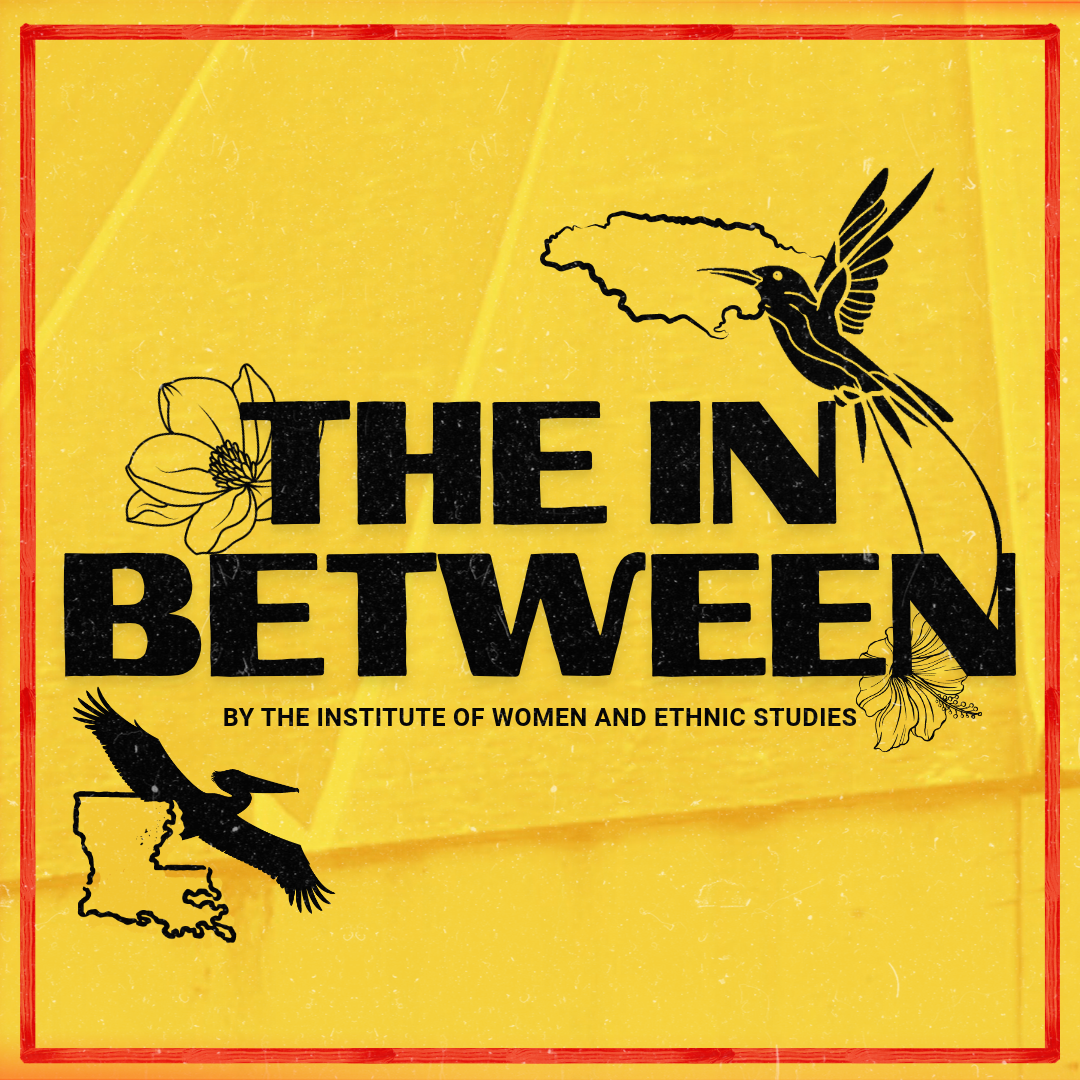
The In Between podcast explores what it means to live in climate-based disaster cycles. This podcast will go between two places — New Orleans and Jamaica — two time periods — 2005 and 2025 — and two hurricanes — Hurricane Katrina and Hurricane Melissa. Hosted by Iman Shervington, Senior Director of Media & Communications at the Institute of Women & Ethnic Studies, The In Between, goes between conversations with community, non-profit, and government leaders in New Orleans recorded in 2025, 20 years after Hurricane Katrina, and conversations with first responders and healthcare workers in Jamaica recorded in June 2026, 8 months after Hurricane Melissa. In each episode, their experiences, reflections, warnings, and survival stories are put in dialogue with one another to think through what is needed to adapt to our current reality as individuals, as communities, and as a global society.
NEW ORLEANS FEATURED GUESTS:
Michele Brierre
Flozell Daniels
Jordan Flaherty
Cyndi Nguyen
Nick Shapiro
JAMAICA FEATURED GUESTS:
Dr. Wendel Abel, psychiatrist
Falmouth Hospital staff: Annamieke, Devon, Dudley, Everod, Jazzmine, Morris, Olive, and Sedaka
Music courtesy of Courtney Bryan
EPISODE 1: From Katrina to Melissa
Hurricane Katrina marked a turning point in disaster response and climate awareness. Twenty years later, Hurricane Melissa wreaked havoc on the island of Jamaica, forcing many to relive the history of Katrina and see connections between these two disasters. New Orleans-based leaders Cyndi Nguyen, Michelle Brierre, Jordan Flaherty, and Flozell Daniels recount what happened to them during and after the storm, sharing how Katrina immediately reshaped their lives and careers. Jamaican psychiatrist, Dr. Wendel Abel, explains the connections between these two places and two horrific events, followed by a reflection from Morris Davis, a porter at Falmouth Hospital, a hospital located just steps from the sea in the Western Jamaican parish of Trelawny, which was highly impacted by the storm.
EPISODE 2: Are We Going to Get Through This Alive?
To be released on November 4, 2026
Devon Baker, a porter from Jamaica’s Falmouth Hospital, reflects on surviving Hurricane Melissa at the hospital and the lack of government support he has received. His reflection connects to the broader topic of what governments have done or should do to better prepare for disasters of this scale. Former New Orleans City Council Member Cyndi Nguyen, Jamaican psychiatrist Dr. Wendel Abel, retired non-profit leader Michele Brierre, and public policy expert Flozell Daniels offer their perspectives on policy, public health, and philanthropic leadership in disaster response.
EPISODE 3: 1, 2 Step
To be released on November 11, 2026
Olive Campbell-Cameron, a security guard from Jamaica’s Falmouth Hospital, recounts how she helped save lives during the storm, as illustrated through staff’s use of the phrase “1, 2 Step." She speaks about the uncertainty people in Jamaica feel around upcoming storms due to the lack of adequate housing and shelter options, which highlights how housing insecurity—rising building costs, roof repairs, and limited government assistance—impacts recovery and affects other realms of society, such as education. Her reflections connect to New Orleans-based guests Cyndi Nguyen, Michele Brierre, Jordan Flaherty, and Flozell Daniels, whose personal and professional experiences post-Hurricane Katrina show the ripple effects of a lack of adequate housing and rebuilding assistance, and also identify some potential solutions.
EPISODE 4: From Righteous to Ambulance Chasers
To be released on November 18, 2026
Nick Shapiro, Associate Professor of Human Biology & Society at UCLA, spent 15 years tracking down the FEMA-provided trailers used as temporary housing after Hurricane Katrina. His work revealed a major public health threat that not only affected New Orleans, yet also impacted other communities worldwide, exposing the intersection between health and disaster capitalism.
EPISODE 5: Walk Good
To be released on November 25, 2026
Jamaican psychiatrist Dr. Wendel Abel knew days before Hurricane Melissa made landfall that this one was going to be serious and Jamaica needed to be prepared. Days leading up to the storm he began contacting members of the Jamaican diaspora outside of Jamaica to create a network of support, including fellow Jamaican-born psychiatrist and our Founder at the Institute of Women & Ethnic Studies (IWES), Dr. Denese Shervington. She was able to respond just hours after the storm, and has continued to show up along with other staff members at IWES through a newly created initiative, Rise Up, Jamaica. Reflecting on the need for a health-based response, Dr. Abel reflects further on Melissa’s impact on Jamaica’s healthcare system, especially the need for psychosocial support and mental health resources in disaster response. Dudley Clarke, a porter from Jamaica’s Falmouth Hospital, provides personal context to Wendel’s more theoretical reflections by sharing his survivor journey and the need for ongoing mental health support. To provide some of the wisdom learned on the ground in New Orleans post-Hurricane Katrina, retired public health practitioner and non-profit leader Michele Brierre reflects on health systems after the disaster, interwoven with testimony from philanthropic leader and public policy expert Flozell Daniels on the importance of addressing emotional and mental well-being post-disaster as a core component of the immediate response and long-term recovery.
Episode 6: Quiet Heroes
To be released on December 2, 2026
Dr. Jazzmine Robinson, a medical officer at Jamaica’s Falmouth Hospital, reflects on her experience arriving at the hospital after the storm — starting with her journey to get there! — and what she and other hospital staff had to do to adjust to the reality of the storm’s impact, both on people and the physical structures and buildings of the hospital itself. She also honors the “Quiet Heroes,” those who sacrificed everything to save others but go practically invisible, noting the need to elevate their voices. Jamaican psychiatrist Dr. Wendel Abel connects her reflections and the hospital’s coastal location to broader Jamaican infrastructure trends and historical context, offering insight into why many key facilities in Jamaican’s coastal cities sit near the ocean. In New Orleans, philanthropic leader and public policy expert Flozell Daniels and organizer, journalist, and filmmaker Jordan Flaherty shout out the Quiet Heroes in the Gulf South that led the deep organizing that followed Katrina in New Orleans, emphasizing strategic lessons that can be helpful for Jamaica’s recovery in the short and long-term.
Episode 7: When the Rain Falls
To be released on December 9, 2026
Annamieke Peters Thompson, a nurse from Jamaica’s Falmouth Hospital, describes her experience as one of two nurses in the Accident & Emergency department during the storm. She packed a bag for one day, yet didn’t know she would stay for a week! This led to a lack of communication with her family, and when she finally was able to reconnect with them she saw the impact of the storm on her daughter and other children at her church. Jamaican psychiatrist and retired professor Dr. Wendel Abel speaks to this need for psychosocial supports for youth post-disaster, which is further reinforced by the New Orleans based guests Cyndi Nguyen, founder and former leader of the youth-focused nonprofit VIET; Jordan Flaherty, filmmaker and journalist; Michele Brierre, retired executive director of the Ellis Marsalis Center for Music who brought extensive public health experience to support the Center’s youth educational programming; and Flozell Daniels, a philanthropic leader and juvenile justice reform advocate. They share both intimate stories of how families — including their own children — coped with the aftermath of Hurricane Katrina on young people, connecting it back to broader systemic issues like the lack of coordinated resources for youth and the major changes that were made to New Orleans' public schools following the disaster.
Episode 8: Not My Monkey, Not My Zoo
To be released on December 16, 2026
Sedaka Donaldson, Senior Medical Officer at Jamaica’s Falmouth Hospital, shares the unique challenges he faced after Hurricane Melissa living between Kingston — which didn’t receive much major damage from the storm — and Falmouth — which was totally devastated. He describes the experience as being “night and day,” and his first-hand view of the recovery, resilience, and disaster toll lead him to feel that for folks in Kingston, the attitude has been, “not my monkey, not my zoo.” This tendency to disengage from the post-disaster trauma until one is personally affected connects with reflections from post-Hurricane Katrina New Orleans from public policy expert and philanthropic leader Flozell Daniels and organizer and journalist Jordan Flaherty, who note how Katrina served as a canary in a coal mine for a slew of other issues in the United States.
Episode 9: It Is for the Sea
To be released on December 23, 2026
So what does it mean to live in the in between? Communities worldwide share vulnerabilities due to the impact of climate-based disasters and the responsibility to support one another crosses many borders leading one to wonder, what can we learn from each other? Looking back at their experiences post Hurricane Katrina, philanthropic leader Flozell Daniels, retired non-profit leader Michele Brierre, researcher Nick Shapiro, and former non-profit leader and city councilmember Cyndi Nguyen all share their closing reflections on what is needed at the local, regional, national, and global levels to address climate-based disaster recovery that prioritizes people over profit. HIghlighting the universality of the problem despite different cultural contexts, one last quiet hero, Everod Ingram, closes it all out by crystallizing the podcast’s core existential question through one simple, yet profound reflection.